δόλος (G1388) — deceit, guile, treachery
Part of the 1 Peter 2:1 Vice List study
Contents
- Overview
- Etymology and Semantic Range
- OT / LXX Background
- NT Distribution
- Theological Note
- NT Occurrences
- LXX Occurrences (Canonical)
Overview
| Field | Value |
|---|---|
| Strong's | G1388 |
| Greek | δόλος |
| Transliteration | dolos |
| Gloss | deceit, guile, treachery |
| 1 Pet 2:1 KJV | "guile" |
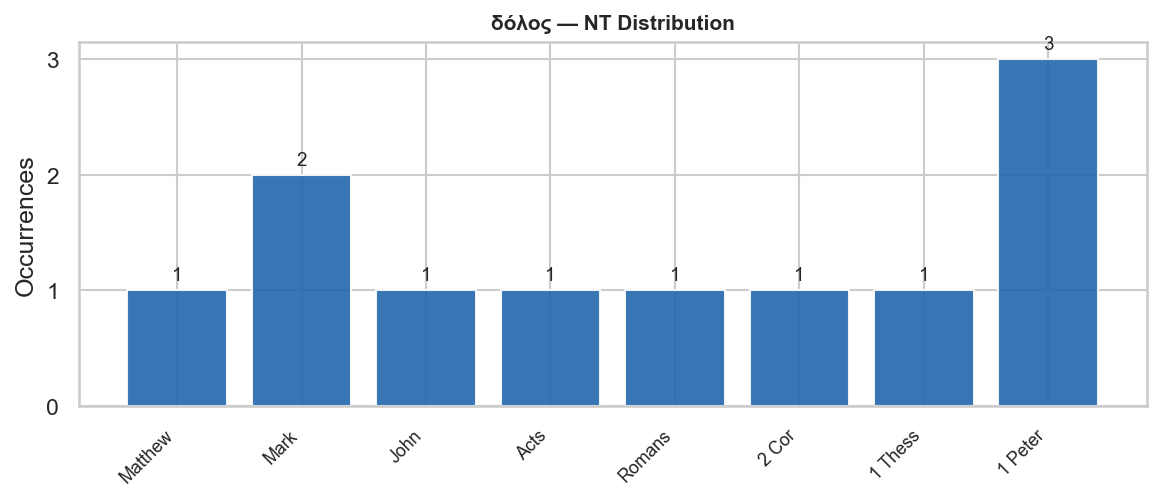
| NT occurrences | 11 (8 books) |
| LXX occurrences (canonical) | 34 |
| Hebrew background | מִרְמָה (deceit) (39× OT); רְמִיָּה (treachery) (15× OT) |
Etymology and Semantic Range
From δέλω (to trap or snare). Originally denoted a lure or bait used to trap animals; extended to any cunning trick or calculated deception. The image is of concealed intent — the predator's bait hidden beneath an innocent appearance.
δόλος appears in NT vice lists (Rom 1:29; Mark 7:22) and describes the plot to arrest Jesus (Matt 26:4; Mark 14:1, "take Jesus by δόλῳ"). Jesus calls Nathanael "an Israelite in whom is no δόλος" (John 1:47), consciously echoing Ps 32:2 LXX ("in whose spirit there is no δόλος"). The term thus spans the full range from interpersonal deception to explicit conspiracy.
OT / LXX Background
The LXX uses δόλος 34× in canonical books, primarily rendering Hebrew מִרְמָה (H4820, deceit / fraud, 39× OT) and רְמִיָּה (H7423, treachery / slackness, 15× OT). Both Hebrew nouns carry the sense of calculated dishonesty — deliberately misleading another. The Psalms and Proverbs are the main OT loci (8 and 7 LXX occurrences respectively). Notably, Ps 34:13 LXX — "keep your tongue from evil and your lips from speaking δόλον" — is directly quoted by Peter at 3:10.
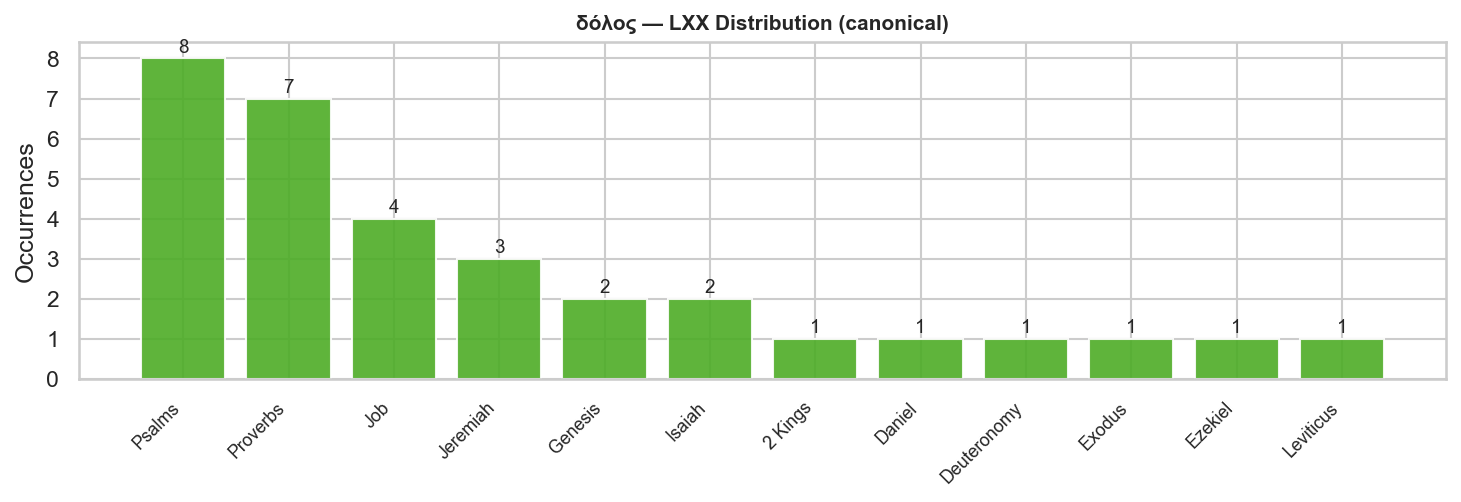
Canonical LXX: 34 occurrences across 14 book(s)
| Book | Count |
|---|---|
| Psalms | 8 |
| Proverbs | 7 |
| Job | 4 |
| Jeremiah | 3 |
| Genesis | 2 |
| Isaiah | 2 |
| 2 Kings | 1 |
| Daniel | 1 |
| Deuteronomy | 1 |
| Exodus | 1 |
| Ezekiel | 1 |
| Leviticus | 1 |
| Micah | 1 |
| Zephaniah | 1 |
NT Distribution
Theological Note
δόλος is the most exegetically rich term in 1 Pet 2:1 because Peter returns to it two verses later. At 2:22 he quotes Isa 53:9 LXX: "neither was any δόλος found in his mouth" — applied to Christ's sinlessness. This makes Christ's freedom from guile the explicit model for the community's behavior commanded in 2:1. The juxtaposition is striking: the readers are to lay aside δόλος (2:1) because their Lord never had it (2:22). The Suffering Servant's guileless mouth becomes the paradigm for the new community's speech.
NT Occurrences
| Reference | Greek form | KJV text |
|---|---|---|
| 1 Peter 2:1 | δόλον | Wherefore laying aside all malice, and all guile, and hypocrisies, and envies, and all evil speakings, |
| 1 Peter 2:22 | δόλος | Who did no sin, neither was guile found in his mouth: |
| 1 Peter 3:10 | δόλον. | For he that will love life, and see good days, let him refrain his tongue from evil, and his lips that they speak no gui… |
| 1 Thess 2:3 | δόλῳ· | For our exhortation was not of deceit, nor of uncleanness, nor in guile: |
| 2 Cor 12:16 | δόλῳ | But be it so, I did not burden you: nevertheless, being crafty, I caught you with guile. |
| Acts 13:10 | δόλου | And said, O full of all subtilty and all mischief, thou child of the devil, thou enemy of all righteousness, wilt thou n… |
| John 1:47 | δόλος | Jesus saw Nathanael coming to him, and saith of him, Behold an Israelite indeed, in whom is no guile! |
| Matthew 26:4 | δόλῳ | And consulted that they might take Jesus by subtilty, and kill him. |
| Mark 7:22 | δόλος, | Thefts, covetousness, wickedness, deceit, lasciviousness, an evil eye, blasphemy, pride, foolishness: |
| Mark 14:1 | δόλῳ | After two days was the feast of the passover, and of unleavened bread: and the chief priests and the scribes sought how … |
| Romans 1:29 | δόλου, | Being filled with all unrighteousness, fornication, wickedness, covetousness, maliciousness; full of envy, murder, debat… |