שָׁם...שָׁם — The Distributive Repetition Idiom in Biblical Hebrew
Focus passage: Isaiah 28:10, 13
Corpus: Hebrew Old Testament (OSHB)
Topic: The use of repeated שָׁם ("there") as a distributive idiom, and its broader pattern in Biblical Hebrew
Build script: scripts/ot/lexicon/build_sham_distributive_report.py
Contents
- The Exegetical Question
- The Isaiah 28 Text
- Why Translators Say "Here a Little, There a Little"
- Distributive Repetition as a Hebrew Idiom
- Survey of Repeated שָׁם Across the OT
- Parallel Distributive Patterns: בֵּין...בֵּין and זֶה...זֶה
- The Rhetorical Irony of Isaiah 28
- Data Tables
The Exegetical Question
Isaiah 28:10 and 13 both contain the phrase:
צַו לָצַו צַו לָצַו קַו לָקַו קַו לָקַו זְעֵיר שָׁם זְעֵיר שָׁם
Most English translations render the final clause "here a little, there a little" (ESV, NIV, NASB, KJV). Two questions arise:
- Why is שָׁם used twice rather than pairing it with פֹּה ("here") to create a natural "here...there" contrast?
- Why do translators say "here" when the Hebrew word means "there"?
Both questions have the same answer: this is a standard distributive repetition pattern in Biblical Hebrew.
The Isaiah 28 Text
Isaiah 28:10
כִּי צַו לָצַו צַו לָצַו קַו לָקַו קַו לָקַו זְעֵיר שָׁם זְעֵיר שָׁם
Isaiah 28:13
וְהָיָה לָהֶם דְּבַר יְהוָה צַו לָצַו צַו לָצַו קַו לָקַו קַו לָקַו זְעֵיר שָׁם זְעֵיר שָׁם
The phrase זְעֵיר שָׁם זְעֵיר שָׁם literally reads:
"a little there, a little there"
The word זְעֵיר (H2191) means "a little, a trifle." שָׁם (H8033) means "there." There is no פֹּה ("here") anywhere in the phrase.
The entire clause — צַו לָצַו קַו לָקַו זְעֵיר שָׁם — is almost certainly a singsong mimicry, representing either: - Isaiah mocking the drunken priests and prophets of Jerusalem who dismiss his message as childish babble (the majority scholarly reading), or - The priests mocking Isaiah, claiming his teaching is all precept on precept, line on line, with only piecemeal content
Either way, the phrase describes fragmented, piecemeal instruction — truth delivered in tiny increments scattered across different occasions and places.
Why Translators Say "Here a Little, There a Little"
Translators render שָׁם...שָׁם as "here...there" for two reasons:
1. The distributive idiom requires contrast in English. When Biblical Hebrew repeats a locative word to signal scattered distribution, English cannot simply repeat "there...there" — that sounds like two references to the same place. English requires alternating words ("here...there," "on this side and that side") to convey the same scattered, piecemeal sense that Hebrew conveys through repetition.
2. The first שָׁם must be "near" to be distributive. In a distributive reading, one instance implicitly anchors the near point ("here, at this moment/place") and the other the far point ("there, at another"). Translators supply "here" for the first to complete the distribution that Hebrew leaves implicit.
The Septuagint handles this differently, rendering the whole singsong phrase abstractly as θλῖψιν ἐπὶ θλῖψιν ("trouble upon trouble") — sidestepping the idiom entirely. The Vulgate follows a similar evasion. This itself is evidence that ancient translators found the distributive repetition difficult to render literally.
Distributive Repetition as a Hebrew Idiom
The שָׁם...שָׁם pattern belongs to a broader Hebrew rhetorical principle: a word repeated across two parallel slots signals distribution, not duplication. The same logic governs several related constructions:
| Pattern | Example | Meaning |
|---|---|---|
| שָׁם...שָׁם | Isa 28:10 — זְעֵיר שָׁם זְעֵיר שָׁם | "a little here, a little there" |
| מִזֶּה...מִזֶּה | Exo 26:13 — מִזֶּה וּמִזֶּה | "on this side and on that side" |
| זֶה...זֶה | Isa 44:5 — זֶה יֹאמַר...וְזֶה יִקְרָא...וְזֶה יִכְתֹּב | "one will say...another will call...yet another will write" |
| כָּזֹה וְכָזֶה | 2 Sam 11:25 — כִּי כָזֹה וְכָזֶה תֹּאכַל הֶחָרֶב | "the sword devours one as well as another" |
| בֵּין...וּבֵין | Lev 10:10 — בֵּין הַקֹּדֶשׁ וּבֵין הַחֹל | "between the holy and the common" (multiple pairs) |
In each case, Hebrew uses the same deictic word twice where English instinctively reaches for contrast ("this/that," "one/another," "here/there"). This is not ambiguity or error — it is a consistent structural feature of the language.
Survey of Repeated שָׁם Across the OT
שָׁם (H8033) occurs 832 times in the OT. Of these, 90 verses contain the word twice or more in a single verse. The charts below show the distribution.
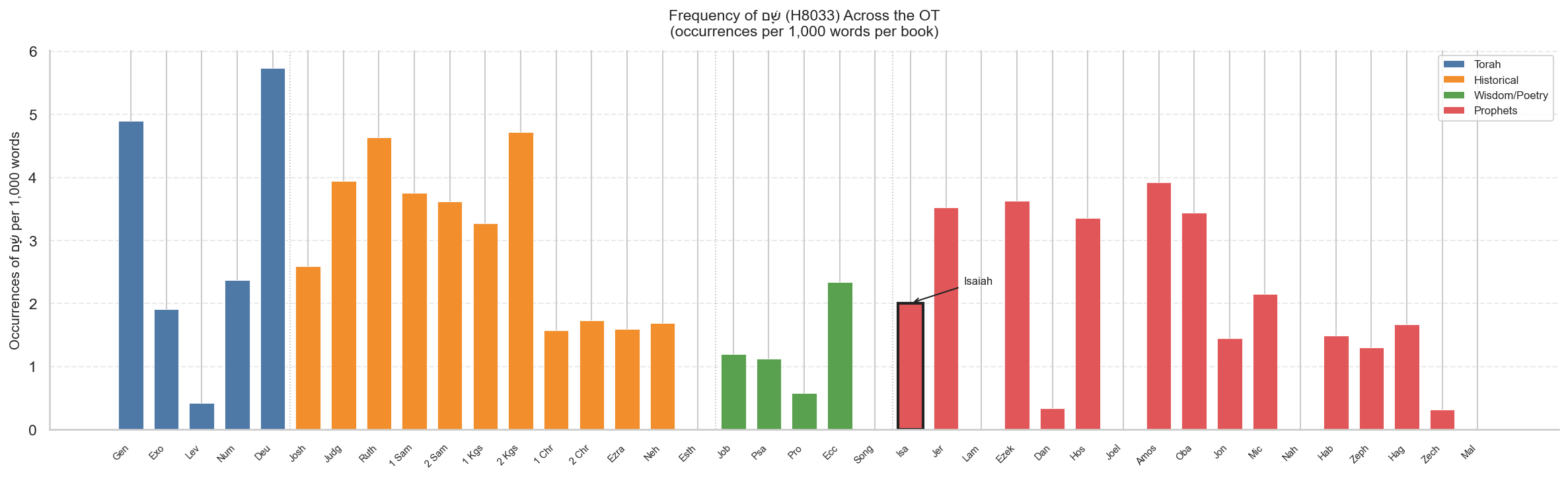
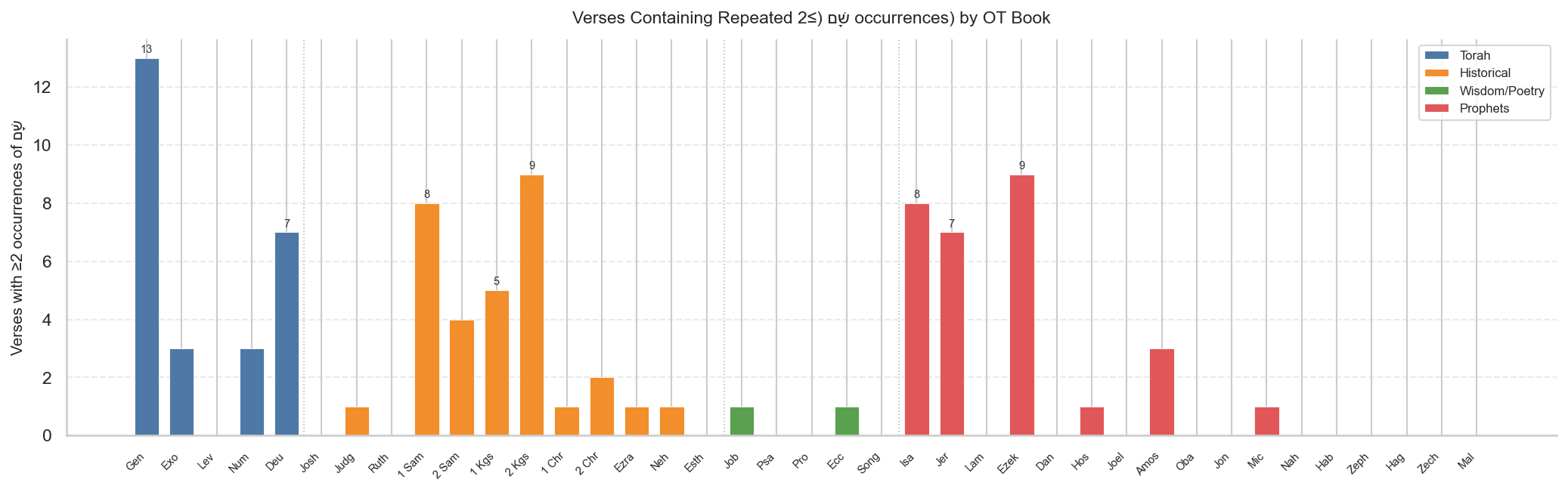
The 90 repeated-שָׁם verses fall into three functional categories:
Category 1 — Anaphoric (pointing to the same place twice)
The most common pattern. שָׁם is repeated because two or more actions happen in the same location, and each clause needs to anchor itself there.
Ezekiel 20:28 (4× שָׁם) — Israel's apostasy in the promised land:
וַיִּזְבְּחוּ שָׁם אֶת זִבְחֵיהֶם וַיִּתְּנוּ שָׁם כַּעַס קָרְבָּנָם וַיָּשִׂימוּ שָׁם רֵיחַ נִיחוֹחֵיהֶם וַיַּסִּיכוּ שָׁם אֶת נִסְכֵּיהֶם
"They sacrificed there their sacrifices; they presented there their offensive offerings; they set there their pleasing aromas; and they poured out there their drink offerings."
Each שָׁם pins a new act of idolatry to the same place. This is anaphoric, not distributive — all four point to the same referent.
Isaiah 13:21 (3× שָׁם) — Babylon's desolation:
וְרָבְצוּ שָׁם צִיִּים ... וְשָׁכְנוּ שָׁם בְּנוֹת יַעֲנָה ... וּשְׂעִירִים יְרַקְּדוּ שָׁם
"Desert creatures shall lie down there ... ostriches shall dwell there ... wild goats shall dance there."
Category 2 — Structural/Elegiac (repeated as a solemn refrain)
Genesis 49:31 (3× שָׁם) — Jacob's burial instructions:
שָׁמָּה קָבְרוּ אֶת אַבְרָהָם ... שָׁמָּה קָבְרוּ אֶת יִצְחָק ... וְשָׁמָּה קָבַרְתִּי אֶת לֵאָה
"There they buried Abraham and Sarah ... there they buried Isaac and Rebekah ... and there I buried Leah."
The triple שָׁם creates a liturgical, elegiac rhythm. Each "there" marks a new patriarch or matriarch, but all point to the same cave at Machpelah.
Category 3 — Rhetorical hammer (pounding home inevitability)
Jeremiah 42:16 (3× שָׁם):
הַחֶרֶב ... שָׁם תַּשִּׂיג אֶתְכֶם ... וְהָרָעָב ... שָׁם יִדְבַּק אַחֲרֵיכֶם ... וְשָׁם תָּמֻתוּ
"The sword ... will overtake you there ... the famine ... will follow hard after you there ... and there you will die."
The repeated שָׁם is not distributive — it is a rhetorical drum-beat, hammering home that Egypt is no refuge. Each "there" makes the doom more inescapable.
Isaiah 28 stands apart
None of the other 90 verses share the exact configuration of Isaiah 28: זְעֵיר + שָׁם repeated as a quantified distributive. The pairing of a quantity word (זְעֵיר, "a little") with the locative שָׁם creates a unique idiom meaning "a small amount here, a small amount there" — piecemeal instruction scattered across occasions. This is the only OT verse where שָׁם functions this way.
Parallel Distributive Patterns
מִזֶּה...מִזֶּה — Exodus 26:13
The tabernacle curtain instructions:
וְהָאַמָּה מִזֶּה וְהָאַמָּה מִזֶּה בָּעֹדֵף ... יִהְיֶה סָרוּחַ עַל צִדֵּי הַמִּשְׁכָּן מִזֶּה וּמִזֶּה
"A cubit on this side and a cubit on this side in the surplus ... it shall hang over the sides of the tabernacle on this side and that side to cover it." (ESV: "on this side and that side")
This is the closest structural parallel to Isaiah 28. מִזֶּה is literally "from this" — the same demonstrative repeated, not alternated with "from that" (מִזֶּה...מִזֶּה rather than מִזֶּה...מִשָּׁם). The meaning is unmistakably distributive — the overhang extends in both directions — and translators must supply "that side" in English even though Hebrew says "this side" twice.
זֶה...זֶה — Isaiah 44:5
The eschatological ingathering:
זֶה יֹאמַר לַיהוָה אָנִי וְזֶה יִקְרָא בְשֵׁם יַעֲקֹב וְזֶה יִכְתֹּב יָדוֹ לַיהוָה
"This one will say 'I belong to the LORD'; another will call himself by the name of Jacob; yet another will write on his hand 'The LORD's.'"
Three repetitions of זֶה, each meaning a different person. English requires "this one...another...yet another" to convey what Hebrew expresses by repeating the same word. The ESV translates all three differently to make the distribution legible in English, though Hebrew uses one word throughout.
כָּזֹה וְכָזֶה — 2 Samuel 11:25
David to Joab's messenger after Uriah's death:
כִּי כָזֹה וְכָזֶה תֹּאכַל הֶחָרֶב
"for like this and like that the sword devours" (lit.) "for the sword devours now one and now another" (NASB) "the sword devours one as well as another" (ESV)
The same word (זֶה) in two slightly variant forms (זֹה / זֶה) signals "sometimes one, sometimes the other" — randomness and indiscrimination of war. English again must supply the contrast ("one...another") that Hebrew encodes through repetition.
The Rhetorical Irony of Isaiah 28
The singsong phrase of Isaiah 28:10/13 operates on two levels simultaneously:
Level 1 — Mockery of fragmented teaching. Whether Isaiah is mimicking his critics or his critics are mimicking him, the phrase characterizes prophetic teaching as childish, piecemeal, and incomprehensible — "a little rule here, a little rule there; a little line here, a little line there."
Level 2 — Ironic fulfillment (v. 11). The very next verse turns the taunt into a threat:
כִּי בְּלַעֲגֵי שָׂפָה וּבְלָשׁוֹן אַחֶרֶת יְדַבֵּר אֶל הָעָם הַזֶּה
"For by people of strange lips and with a foreign tongue the LORD will speak to this people."
The babble they dismissed as incomprehensible instruction becomes a prophecy: they will hear truly incomprehensible speech — Assyrian. The צַו לָצַו that they ridiculed as stammering will be replaced by speech they literally cannot understand. Paul quotes this verse in 1 Corinthians 14:21 in his discussion of tongues, connecting the Assyrian judgment motif to the sign-function of uninterpreted glossolalia.
The distributive שָׁם...שָׁם is therefore not incidental to the passage — it is part of the mimicry. The scattered, fragmented, "a little here, a little there" quality is exactly what the speakers are mocking. And that scatteredness — delivered in the Hebrew idiom of repeated rather than contrasted locatives — is what Isaiah turns against them.
Data Tables
שָׁם Occurrences per 1,000 Words — Top 15 OT Books
| Book | Total שָׁם | Total Words | Per 1,000 | Verses w/ Repeated שָׁם |
|---|---|---|---|---|
| Deuteronomy | 138 | 24,071 | 5.73 | 7 |
| Genesis | 178 | 36,331 | 4.90 | 13 |
| 2 Kings | 99 | 20,969 | 4.72 | 9 |
| Ruth | 18 | 3,882 | 4.64 | 0 |
| Judges | 78 | 19,803 | 3.94 | 2 |
| Amos | 25 | 6,384 | 3.92 | 0 |
| 1 Samuel | 116 | 30,910 | 3.75 | 8 |
| Ezekiel | 123 | 33,884 | 3.63 | 9 |
| 2 Samuel | 93 | 25,704 | 3.62 | 4 |
| Jeremiah | 145 | 41,125 | 3.53 | 7 |
| Numbers | 75 | 23,513 | 3.19 | 3 |
| Ezra | 18 | 5,743 | 3.13 | 0 |
| Joshua | 62 | 20,113 | 3.08 | 2 |
| Isaiah | 83 | 37,040 | 2.24 | 8 |
| Psalms | 75 | 43,226 | 1.74 | 2 |
Verses with Repeated שָׁם — Selected Examples by Category
| Reference | שָׁם count | Category | Function |
|---|---|---|---|
| Isa 28:10, 13 | 2 | Distributive | "a little here, a little there" — piecemeal instruction |
| Ezk 20:28 | 4 | Anaphoric | Each clause anchors another act of apostasy to the same site |
| Gen 49:31 | 3 | Elegiac | Solemn refrain listing patriarchs buried at Machpelah |
| Jer 42:16 | 3 | Rhetorical | Inevitability of doom in Egypt — hammer repetition |
| Isa 13:21 | 3 | Anaphoric | Different creatures inhabiting the same ruined Babylon |
| Gen 26:25 | 3 | Narrative | Three actions at the same well site |
| 1 Sam 7:17 | 3 | Geographic | Samuel's circuit returning to the same home base |
The unique character of Isaiah 28's שָׁם...שָׁם lies not in the repetition itself — that appears 90 times across the OT — but in the specific combination with זְעֵיר ("a little") that transforms a locative adverb into a quantified, distributive idiom for piecemeal scatteredness. No other OT verse replicates this exact construction.