ὑπόκρισις (G5272) — hypocrisy, dissimulation, play-acting
Part of the 1 Peter 2:1 Vice List study
Contents
- Overview
- Etymology and Semantic Range
- OT / LXX Background
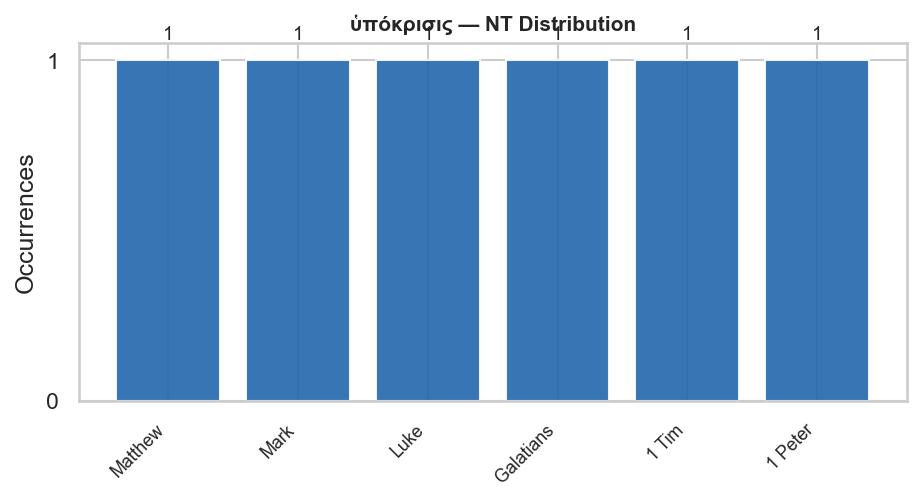
- NT Distribution
- Theological Note
- NT Occurrences
Overview
| Field | Value |
|---|---|
| Strong's | G5272 |
| Greek | ὑπόκρισις |
| Transliteration | hypokrisis |
| Gloss | hypocrisy, dissimulation, play-acting |
| 1 Pet 2:1 KJV | "hypocrisies" |
| NT occurrences | 6 (6 books) |
| LXX occurrences (canonical) | 0 |
| Hebrew background | חֹנֶף (godlessness) (1× OT) |
Etymology and Semantic Range
From ὑποκρίνομαι (to play a part on stage, to answer from under a mask). In classical Greek usage, ὑποκρίσις was entirely neutral — it described the craft of acting. The NT hardens it into a moral negative: the deliberate performance of piety that contradicts one's actual condition.
Jesus deploys ὑπόκρισις against the scribes and Pharisees in his seven woes (Matt 23), where the indictment is precisely the gap between outward religious performance and inward reality. Mark 12:15 records Jesus perceiving their ὑπόκρισιν when they attempt to trap him. Paul uses it for Peter's behaviour at Antioch (Gal 2:13): "the other Jews dissembled (συνυπεκρίθησαν) likewise … insomuch that Barnabas also was carried away with their hypocrisy (ὑποκρίσει)." In 1 Tim 4:2 "lies spoken in hypocrisy (ὑποκρίσει)" describes the false teacher whose conscience has been seared.
OT / LXX Background
The LXX uses ὑπόκρισις only in deuterocanonical books (0× canonical OT), reflecting the fact that the theatrical dimension of the term is distinctly Greek. The closest Hebrew equivalent is חֹנֶף (H2612, godlessness / profaneness), which occurs only once in the OT (Job 34:30). The Hebrew Bible addresses the gap between appearance and reality through narrative (e.g., Ananias and Sapphira's story is anticipated in Achan's, Josh 7) rather than a single lexeme. The concept Peter names here is shaped more by Hellenistic Jewish moral discourse than by OT Hebrew.
NT Distribution
Theological Note
The plural ὑποκρίσεις (KJV "hypocrisies") is notable — it suggests not a single act but a habitual pattern of performances. In the context of 1 Peter's scattered and pressured communities, ὑπόκρισις would describe social self-presentation crafted for group approval rather than integrity before God. It pairs naturally with φθόνος: both are sins of the interior life directed against others — one through false face, one through hidden resentment.
NT Occurrences
| Reference | Greek form | KJV text |
|---|---|---|
| 1 Peter 2:1 | ὑποκρίσεις | Wherefore laying aside all malice, and all guile, and hypocrisies, and envies, and all evil speakings, |
| 1 Tim 4:2 | ὑποκρίσει | Speaking lies in hypocrisy; having their conscience seared with a hot iron; |
| Galatians 2:13 | ὑποκρίσει. | And the other Jews dissembled likewise with him; insomuch that Barnabas also was carried away with their dissimulation. |
| Luke 12:1 | ὑπόκρισις | In the mean time, when there were gathered together an innumerable multitude of people, insomuch that they trode one upo… |
| Matthew 23:28 | ὑποκρίσεως | Even so ye also outwardly appear righteous unto men, but within ye are full of hypocrisy and iniquity. |
| Mark 12:15 | ὑπόκρισιν | Shall we give, or shall we not give? But he, knowing their hypocrisy, said unto them, Why tempt ye me? bring me a penny,… |