προδότης (G4273) — traitor, betrayer
Part of the 2 Timothy 3:1–5 Vice List study
Contents
- Overview
- Etymology and Semantic Range
- OT / LXX Background
- NT Distribution
- Theological Note
- NT Occurrences
Overview
| Field | Value |
|---|---|
| Strong's | G4273 |
| Greek | προδότης |
| Transliteration | prodotes |
| Gloss | traitor, betrayer |
| 2 Tim 3 verse | 3:4 |
| KJV rendering | "traitors" |
| NT occurrences | 3 (3 books) |
| LXX occurrences (canonical) | 0 |
Etymology and Semantic Range
From προδίδωμι (to hand over, betray): πρό (before/forth) + δίδωμι (to give). The one who "gives someone over" to their enemies.
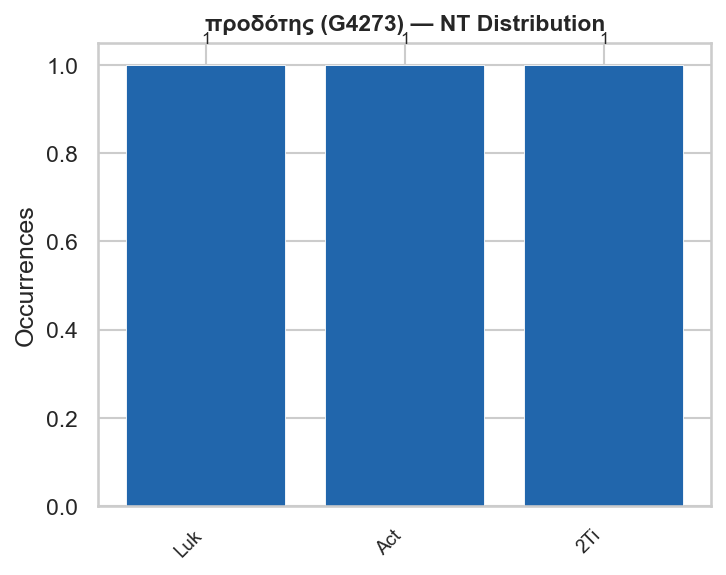
Three NT occurrences: Luk 6:16 (Judas called προδότης — the only NT individual named a traitor), Act 7:52 (those who betrayed and killed the prophets), and here. Four LXX occurrences across 2 books.
OT / LXX Background
Hebrew בֹּגֵד (treacherous one, traitor; Psa 119:158; Isa 24:16; Hab 1:13) — from בָּגַד (to act treacherously, to cover/wrap, hence to hide one's true intentions).
NT Distribution
Theological Note
The only named NT traitor is Judas (Luk 6:16). Paul's use here connects the church's last-days experience to the betrayal of the prophets (Act 7:52): a pattern of those inside the covenant community handing over the faithful.
NT Occurrences
| Reference | Greek form | KJV text |
|---|---|---|
| Luk 6:16 | προδότης. | And Judas the brother of James, and Judas Iscariot, which also was the traitor. |
| Act 7:52 | προδόται | Which of the prophets have not your fathers persecuted? and they have slain them which shewed before of the co… |
| 2Ti 3:4 | προδόται, | Traitors, heady, highminded, lovers of pleasures more than lovers of God; |