φθόνος (G5355) — envy, jealousy (malicious)
Part of the 1 Peter 2:1 Vice List study
Contents
- Overview
- Etymology and Semantic Range
- OT / LXX Background
- NT Distribution
- Theological Note
- NT Occurrences
Overview
| Field | Value |
|---|---|
| Strong's | G5355 |
| Greek | φθόνος |
| Transliteration | phthonos |
| Gloss | envy, jealousy (malicious) |
| 1 Pet 2:1 KJV | "envies" |
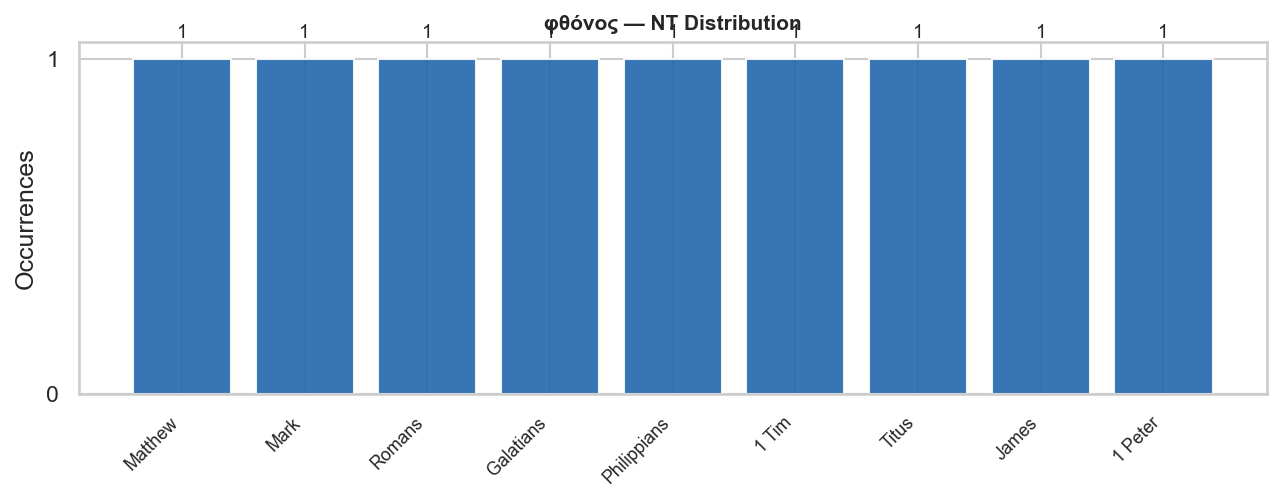
| NT occurrences | 9 (9 books) |
| LXX occurrences (canonical) | 0 |
| Hebrew background | קִנְאָה (envy/zeal — noun) (43× OT); קָנָא (envy/be jealous — verb) (34× OT) |
Etymology and Semantic Range
Root uncertain; possibly related to φθείρω (to corrupt, destroy). Unlike ζῆλος, which can denote positive zeal or ardent desire, φθόνος is uniformly negative in Greek moral vocabulary — it names the pain felt at another's good fortune, combined with the desire to diminish it.
In the NT φθόνος is always negative: it is the explicit motive for which the chief priests delivered Jesus to Pilate (Matt 27:18; Mark 15:10 — two independent witnesses to this). It appears as a "work of the flesh" in Gal 5:21, alongside murders; in Titus 3:3 as a descriptor of the pre-conversion life ("living in malice and φθόνῳ, hateful and hating one another"); and at Phil 1:15 as the motive of some who preach Christ. The contrast with ζῆλος is theologically significant: ζῆλος can be righteous (John 2:17; Rom 10:2) but φθόνος never is.
OT / LXX Background
The LXX uses φθόνος only 4× and all occurrences are deuterocanonical (0× canonical OT). The Hebrew vocabulary does not draw the same sharp distinction: קִנְאָה (H7068, jealousy/zeal, 43× OT) and the verb קָנָא (H7065, 34× OT) cover both positive zeal (Num 25:11, Phinehas; Zech 1:14, God's jealousy for Jerusalem) and negative envy (Gen 37:11, Joseph's brothers). The LXX's minimal use of φθόνος reflects the Greek coinage's restriction to the purely malicious sense, which Hebrew expresses through context rather than lexeme.
NT Distribution
Theological Note
The plural φθόνους (KJV "envies") suggests recurrent occurrences of the disposition. In a community letter written to dispersed believers under social pressure, envy describes the corrosive comparison between members — resentment of another's gifts, standing, or apparent security. Peter's answer in v. 2 is the exact antidote: desire the "sincere milk of the word" and grow — when all are oriented toward the same source of nourishment, competitive envy loses its footing.
NT Occurrences
| Reference | Greek form | KJV text |
|---|---|---|
| 1 Peter 2:1 | φθόνους | Wherefore laying aside all malice, and all guile, and hypocrisies, and envies, and all evil speakings, |
| 1 Tim 6:4 | φθόνος, | He is proud, knowing nothing, but doting about questions and strifes of words, whereof cometh envy, strife, railings, ev… |
| Galatians 5:21 | φθόνοι, | Envyings, murders, drunkenness, revellings, and such like: of the which I tell you before, as I have also told you in ti… |
| James 4:5 | φθόνον | Do ye think that the scripture saith in vain, The spirit that dwelleth in us lusteth to envy? |
| Matthew 27:18 | φθόνον | For he knew that for envy they had delivered him. |
| Mark 15:10 | φθόνον | For he knew that the chief priests had delivered him for envy. |
| Philippians 1:15 | φθόνον | Some indeed preach Christ even of envy and strife; and some also of good will: |
| Romans 1:29 | φθόνου, | Being filled with all unrighteousness, fornication, wickedness, covetousness, maliciousness; full of envy, murder, debat… |
| Titus 3:3 | φθόνῳ | For we ourselves also were sometimes foolish, disobedient, deceived, serving divers lusts and pleasures, living in malic… |